Volunteer fire fighters
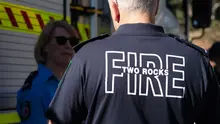
Volunteer fire fighters play a vital role in protecting people, bushland and property across the City of Wanneroo.
If you’re interested in supporting your community, there are opportunities to join one of our four Volunteer Bush Fire Brigades in both firefighting and non-operational support roles.
Volunteer bush fire brigades in Wanneroo
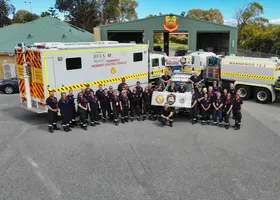
There are four volunteer bush fire brigades in the City of Wanneroo:
North Coastal Bush Fire Brigade.
Quinns Rocks Volunteer Bush Fire Brigade.
Two Rocks Volunteer Bush Fire Brigade.
Wanneroo Central Volunteer Bush Fire Brigade.
Volunteer bush fire brigades provide fire prevention, preparedness and response across areas not covered by DFES gazetted fire districts or land managed by the Department of Biodiversity, Conservation and Attractions (DBCA).
The fire environment in the City includes:
Coastal dunes and foreshore vegetation.
Limestone and caprock outcrops.
Pine plantations and extensive bushland.
Swamps and wetlands.
Rural properties and outbuildings.
Brigades operate and maintain:
Five light tanker 4x4 appliances.
Four heavy duty 4x4 appliances.
A 12,000 litre bulk water tanker.
Fire support dual-cab utilities.
An incident control vehicle.
A mobile canteen.
Brigades may also access City resources such as a front-end loader and 13,000 litre water tanker when required.
Each brigade elects its leadership annually. Typical volunteer roles include:
Captain.
First, Second and Third Lieutenants.
Secretary.
Treasurer.
Equipment Officer.
Communications Officer.
These roles support training, operations, equipment management and emergency response.
Volunteering opportunities and roles
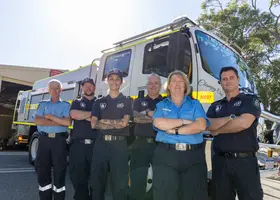
Volunteering as a bush fire firefighter is an opportunity to:
Protect residents, property, bushland and wildlife.
Learn practical emergency response and firefighting skills.
Build teamwork, leadership and resilience.
Become part of a committed and supportive community.
Support neighbouring brigades, DFES and the Department of Biodiversity, Conservation and Attractions (DBCA) when required.
Volunteers are essential to local safety and preparedness, and people of all ages and backgrounds are encouraged to enquire.
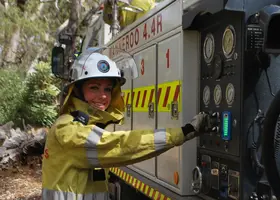
Types of roles
Bush fire brigades offer both operational and non-operational roles, including:
Frontline firefighting.
Radio communications.
Driver and appliance support.
Incident support and logistics.
Administration and brigade operations.
Equipment and fleet support.
Community engagement and safety education.
Volunteers receive full personal protective equipment and ongoing training.
Emergency response volunteers must complete induction, probation and required medical and training components before participating in incidents.
Volunteers receive full personal protective equipment and ongoing training.
Emergency response volunteers must complete induction, probation and required medical and training components before participating in incidents.
How to become a volunteer
Volunteering with a bush fire brigade involves a clear onboarding process to ensure everyone is trained, prepared and safe.
The steps include:
- Determine which brigade you are eligible to join
Eligibility is based on where you live. See which brigade to join below. - Contact the brigade to discuss opportunities
Brigade contact details are listed under each brigade. - Attend at least one monthly brigade meeting
This is required before your membership can progress. - Meet with the Brigade Recruitment Officer
They will explain expectations, responsibilities, training pathways and answer questions. - Complete a medical assessment and basic training
Training includes safety procedures, radio use, equipment handling and basic firefighting. The medical assessment is provided at no cost to volunteers. - Begin the induction and probationary period
New members must demonstrate competency, commitment and readiness before moving into operational roles. - Progress to active service
After completing training and probation, volunteers can attend incidents.
With two years of active service and further training, members may progress to roles such as crew leader or emergency vehicle driver (lights and sirens).
Non-operational (support) volunteers follow a similar process, focusing on training relevant to their duties.
Which brigade to join
Eligibility depends on your residential address. Each brigade serves different parts of the City and holds monthly meetings that potential volunteers can attend.
- Eligible areas: Residents north of Gnangara Road and Whitfords Avenue.
Meeting: First Monday, 7pm.
Venue: Quinns Rocks Fire Station, 14 Hidden Valley Retreat, Clarkson.
More information: Visit the North Coastal Bush Fire Brigade.
Eligible areas: Butler, Carabooda, Clarkson, Jindalee, Merriwa, Mindarie, Neerabup, Nowergup, Quinns Rocks, Ridgewood.
Meeting: Second Monday, 7pm.
Venue: Quinns Rocks Fire Station, 14 Hidden Valley Retreat, Clarkson.
More information: Visit the Quinns Rocks Volunteer Bushfire Brigade website.
Eligible areas: Two Rocks and Yanchep.
Meeting: Second Thursday, 6.30pm.
Venue: Caraway Loop, Two Rocks.
Eligible areas: Banksia Grove, Beldon, Carramar, Connolly, Craigie, Currambine, Edgewater, Heathridge, Hocking, Iluka, Joondalup, Kallaroo, Mullaloo, Ocean Reef, Sinagra, Tapping, Wanneroo, Woodvale.
Meeting: Third Monday, 7pm.
Venue: Building 1, Ashby Operations Centre, 1204 Wanneroo Road, Ashby.