
The City provides guidelines on installation, maintenance and approvals to ensure systems operate safely and comply with health regulations. Explore resources to keep your property compliant and environmentally responsible.
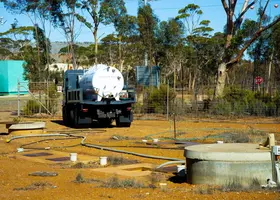
Wastewater
Wastewater includes all liquid waste produced on a property, such as
- Toilet effluent.
- Greywater from bathrooms and laundries.
- Washwater from equipment cleaning.
- Contaminated water from commercial or industrial activities.
Proper management is essential to prevent pollutants like hydrocarbons, detergents, silt, and pathogens from harming the environment or public health.
Any applications for onsite wastewater systems producing over 540L (or 5000L/day of greywater) will be forwarded to the Department of Health along with a “Local Government Recommendation Report” for assessment/approval of the system.
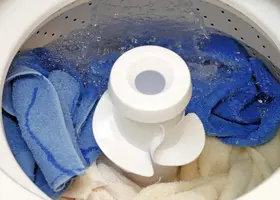
Greywater
Wastewater is made up of “Greywater” and “Blackwater”.
Greywater is wastewater from:
- Washing machines.
- Showers.
- Baths.
- Wash basins.
- Spa baths.
- Laundry tubs.
- Kitchens.
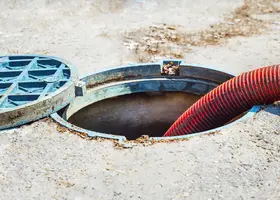
Blackwater
Blackwater is the wastewater from toilets, urinals and bidets.
Kitchen greywater must be treated before reuse in gardens as it can contain elevated levels of greases, oil and detergents. Kitchen greywater must not be reused through a Greywater Diversion Device.
Disposal of wastewater to sewer
If sewer is available within 91m of the property then any proposed wastewater systems must discharge to sewer.
It is the responsibility of the property owner to gain approval from the Water Corporation to discharge wastewater to sewer.
Only when sewer is unavailable to the property and it can be demonstrated that proposed effluent systems are capable of adequately removing contaminants from wastewater will the local government approve of wastewater being disposed onsite.
Guidelines
- An application must be lodged to construct and install an apparatus for on-site wastewater disposal.
- The installation of a wastewater disposal system must comply with the Health (Treatment of Sewage and Disposal of Effluent and Liquid Waste) Regulations 1974 and the Government Sewerage Policy 2019.
- Only approved wastewater systems can be used in WA. To view the list of approved wastewater treatment systems visit the Department of Health website.
Decommissioning a septic system involves having the tank pumped out and either removing or backfilling the system.
Decommissioning process
In order to decommission your septic system the following steps must take place:
- Septic tanks, leach drains or soak wells to be pumped out by a Licensed Liquid Waste Contractor and disposed of at an approved site. Please make sure you retain a copy of the receipt. The receipt is needed later for the certificate of decommissioning.
- The septic system can then be removed. All septic tanks, soak wells and leach drains in the system must be found and removed. The most effective way to ensure that the entire system is removed is to follow the pipe work from each septic tank and/or soak well until it ends, ensuring that there is no outlet to another soak well or leach drain. Soak wells and leach drains may be connected in series and in parallel.
- The holes left behind must then be backfilled with clean sand. It is also important that the sand be compacted to prevent any possible voids.
Where it is not practicable to completely remove the septic system, then an alternative option is to backfill the entire system (septic tanks, soak wells, leach drains) where it remains in the ground. Backfilling involves filling the system with clean sand that is then compacted to prevent any possible voids.
Please note that, in the case of backfilling, the base of the septic tanks must first be completely broken to allow for proper drainage. It is recommended that, wherever possible, the septic system be completely removed, particularly where there may be an intention to further develop a property.
Timeframe for decommissioning
The City recommends that any septic system should be decommissioned as soon as possible once connection to the sewerage system has been made. However, decommissioning becomes a legal requirement in the following instances:
- Within 60 days of a change of use or ownership of the premises once reticulated sewerage has been connected to the property
- In advance of building works that will result in a structure being closer than 1.2m from the septic system.
How to apply
Important notes:
- All applications must be lodged to the City in the first instance.
- Only approved wastewater systems can legally be installed in WA.
- The City will process your application if the proposed apparatus will treat less than 540 L/day of wastewater OR the building to be serviced is a single dwelling.
- If the wastewater volume received by the system is more than 540L/day and the building being serviced is not a single dwelling the City will assess your application and prepare a local government report.
- The report and application will then be forwarded to the Department of Health for processing.
To apply:
- Download and complete the application form.
- Return the completed form via:
- Email: health@wanneroo.wa.gov.au
- In person: 23 Dundebar Road, Wanneroo
- Mail: City of Wanneroo, Locked Bag 1, Wanneroo WA 6946.
Construct or install effluent disposal system application form (PDF)
Property owners should advise the City once an effluent disposal system has been decommissioned, by completing a decommissioning form, indicating the number of septic tanks and soak wells or leach drains that have been removed, together with a copy of the liquid licensed waste contractor's receipt as evidence of the pumping out of the system (where relevant).
Apply online:
Complete the decommissioning form
Or:
- Download and complete the application form below.
- Return the completed form via:
- Email: health@wanneroo.wa.gov.au
- In person: 23 Dundebar Road, Wanneroo
- Mail: City of Wanneroo, Locked Bag 1, Wanneroo WA 6946.
Certificate of decommissioning of an effluent disposal system application form (PDF)