
The Residential Design Codes (R-Codes) is a Planning Code released by the Western Australian Planning Commission (WAPC) that applies to all residential development across Western Australia. R-Codes include a series of development requirements that apply to residential development (e.g. setbacks, car parking visual privacy, overshadowing, etc.). The development requirements contained in the R-Codes vary between the type and density of the proposal.
Objectives
The objectives of the R-Codes are:
- To provide residential development of an appropriate design for the intended residential purpose, density, context of place and scheme objectives.
- To encourage design consideration of the social, environmental and economic opportunities possible from new housing and an appropriate response to local amenity and place.
- To encourage design which considers and respects heritage and local culture.
- To facilitate residential development which offers future residents the opportunities for better living choices and affordability.
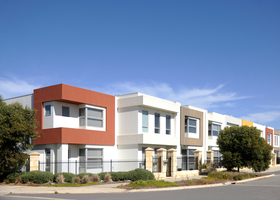
Access the R-Codes
R-Codes set the housing density and development standards for a property.
Residential density and recoding
Residential density and R-Coding determine how land can be developed by outlining the number of dwellings permitted and the design requirements for residential areas.
Frequently asked questions
In the future, the City will investigate additional areas for potential future recoding from low density housing to medium density housing to provide a range of housing types for our residents. The recoding may provide residential development opportunities in the future. The City may then propose an amendment to the Local Planning Scheme to recode an area.
No. Any proposed change will depend on approvals being given by Council, WAPC and ultimately the Minister for Planning.
No. Any recoding of land does not mean that you must subdivide or develop. It simply provides the opportunity and flexibility for you to do so.
An increase in R-Coding (density) does not automatically change your Council rates. Rates are based on your property’s value, not just its zoning. If the value of your property increases over time, potentially influenced by its development potential, your rates may also change.
If the Minister for Planning approves a change to the residential density of a property, it will be published in the Government Gazette. Once published, those people that want to develop will be able to submit subdivision, development and/or building applications at the higher R Code.