
Find out whether you need approval to keep livestock on your property, and the rules for lot sizes, setbacks, fencing and manure.
Definitions
- Livestock includes horses, cattle, sheep, goats, pigs, buffalo, deer, camels, llamas and alpacas.
- Large animals include all livestock as well as emus and ostriches.
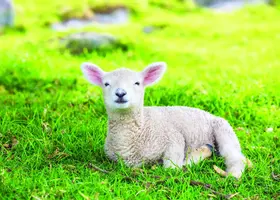
Permitted livestock and minimum lot sizes
Large animals can only be kept on land that is 2,000 m² or larger. They cannot be kept on commercial or industrial lots.
This means that to keep a horse, alpaca, cow, sheep, goat or pig, your property must meet the minimum land size.
Emus and ostriches are not permitted on residential, commercial or industrial lots.
Setbacks for large animals
Large animals must not be kept within 9 metres of any:
Dwelling;
Shop or food premises;
Public building;
Hospital; and
School.
These setbacks help protect public health and prevent nuisance issues.
Fencing and preventing livestock from straying
Livestock must be securely contained at all times.
Your land must be fenced in a way that:
Prevents livestock from escaping; and
Keeps them confined to the area where they are kept.
Livestock must not be allowed to stray onto streets, public places or onto private land without the landowner’s consent.
Manure management
If you keep a large animal, you must:
Provide a manure receptacle with a tight-fitting lid;
Keep the lid closed except when filling or emptying;
Empty the receptacle at least once a week (or more often if needed); and
Collect manure daily and place it in the receptacle.
Penalties
Penalties may apply for:
Allowing livestock to stray;
Keeping livestock on land that is too small;
Failing to maintain secure fencing;
Keeping livestock too close to dwellings or public buildings; and
Poor manure management.
Development (Planning) Approval requirements
The keeping of livestock for both private use or commercial use generally requires Development (Planning) Approval from the City and may also be subject to the requirements of the City's Local Laws. The City's Local Planning Scheme may also contain additional provisions relating to the keeping of livestock in certain areas, including circumstances where livestock is not permitted.
Applications for Development (Planning) Approval are required to be accompanied by an Operational Management Plan addressing (where relevant):
- Type and quantities of livestock being kept;
- Stocking rate based on the Department of Primary Industries and Regional Development’s Stocking Rate Guidelines
- Paddock rotation and irrigation;
- Protection of native vegetation;
- Dust and weed control;
- Waste management;
- Odour management;
- Noise management; and
- Other operational matters.
Visit the Development (Planning) Approval page.