Find out how polyphagous shot-hole borer is being managed across the Perth metropolitan area and what you can do to help reduce its spread.
About polyphagous shot-hole borer
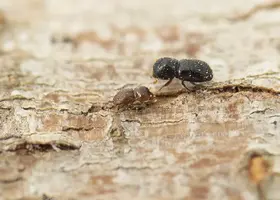
Polyphagous shot-hole borer is a beetle native to Southeast Asia. About the size of a sesame seed, the borer excavates tunnels in trees where it cultivates fungus as a food source.
This fungus spreads in the tunnels of trees, disrupting the flow of water and nutrients. This can result in tree dieback and death.
If the borer were to become established in the City, it could significantly impact our urban canopy.
The national response to polyphagous shot-hole borer is transitioning from an eradication strategy to a long-term management approach, after the National Management Group determined the borer was no longer technically feasible to eradicate.
A national Transition to Management response plan is now in place and is being delivered by the Department of Primary Industries and Regional Development (DPIRD). Under the plan, DPIRD's tree pruning and removal program will focus on trees in the containment zone that pose a risk of spreading the borer outside of the quarantine area.
Landowners in the Management Zone are responsible for managing PSHB on private property, including inspection, treatment, removal, and disposal of infested trees. The City of Wanneroo will continue to manage public trees such as those in streets, parks, and reserves. Residents affected by PSHB are encouraged to seek assistance from WA State Government support programs such as a Treebate or WA Tree Recovery.
Quarantine area
A quarantine area covering the whole Perth metropolitan area restricts the movement of wood, green waste, mulch, live plants and plant material. It is split into two zones, and parts of the City of Wanneroo are in each:
- The Management Zone which covers the inner metropolitan area and includes the suburbs of Alexander Heights, Ashby, Banksia Grove, Carramar, Clarkson, Darch, Girrawheen, Gnangara, Hocking, Jandabup, Koondoola, Landsdale, Madeley, Marangaroo, Mariginiup, Mindarie, Neerabup, Pearsall, Sinagra, Tamala Park, Tapping, Wangara, Wanneroo and Woodvale ; and
- The Containment Zone which is the area between the Management Zone and the outer boundary of the QA. This includes the suburbs of Quinns Rocks, Merriwa, Ridgewood, Nowergup, Pinjar, Jindalee, Butler, Alkimos, Carabooda, Eglinton, Yanchep and Two Rocks.
Restrictions that apply to your area
To understand what restrictions apply to your property, view DPIRD's interactive quarantine map. The map provides:
- Movement rules for your area
- Requirements for handling and transporting wood and plant material
- Cleaning requirements for machinery and vehicles
- Guidance on treated and seasoned wood.
How you can help
Residents play an important role in slowing the spread of polyphagous shot-hole borer. You can help by staying aware, reporting early and following movement rules.
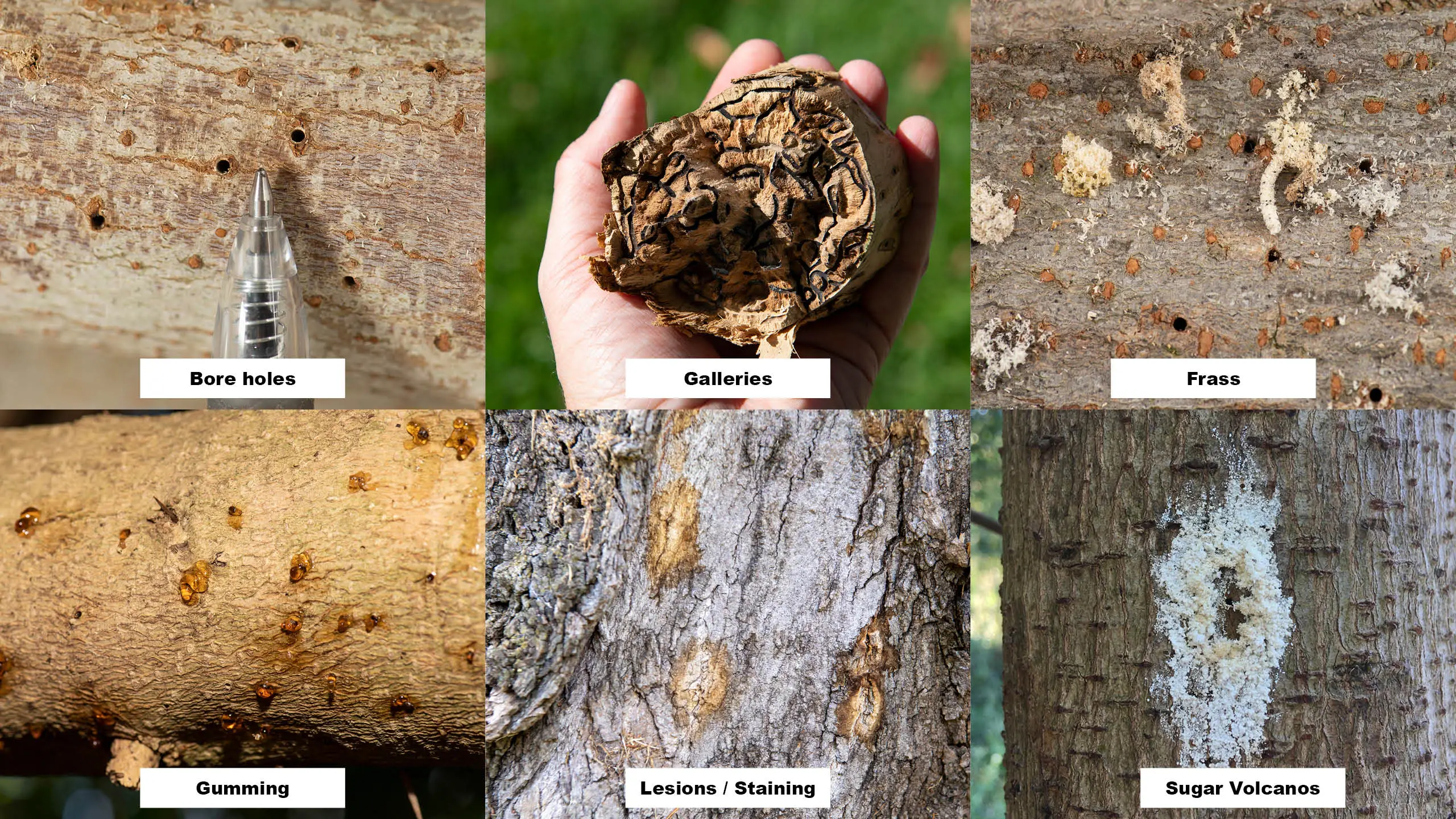
Look for small round entry holes, dark staining, gumming, sawdust-like frass or branch dieback.
To find out what these signs look like and to view images and a list of commonly affected tree species, visit DPIRD’s polyphagous shot-hole borer page.
Do not move untreated wood, green waste, mulch or plant material out of your area. Visit the DPIRD website to check the rules for your location.
Early reporting helps protect trees across Perth. You can report through the MyPestGuide app or contact DPIRD directly.