Explore the City’s Public Art Collection featuring 184 works. Valued at $10.7M (2026), these artworks enrich parks, laneways, buildings and public spaces.
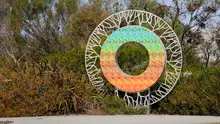
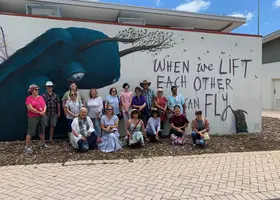
Public Art Safari Trail
Explore these incredible artworks by taking your own tour.
Visit Discover Wanneroo or download our detailed Public Art Safari Trail map, which will guide you to 34 of the most intriguing pieces of 3D artwork within the City. A great way to spend a day.
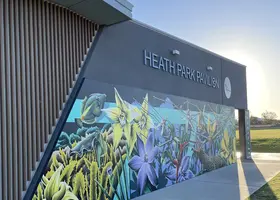
Murals
If you’re considering commissioning a mural, the City offers a comprehensive Mural guide to assist you and answer any questions along the way.
The guide includes practical information on:
Site preparation and after-care.
Budgeting.
Artist selection.
Maintenance and more.
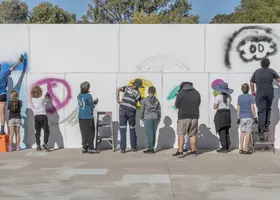
Street Art Wall, Dalvik Park
The City of Wanneroo has a legal street art wall, where anyone can practice their street art skills safely and legally. Whether your medium is spray cans, brush and exterior paint or your own cut out stencils, we would like to see your mural making skills explored on this wall.
Watch the video to view the christening of the wall by local students from Merriwa Primary School and Cal Stals-Clifford and Nicole Gunn from Blank Walls.
Frequently asked questions
Public art is artwork created for everyone to see and enjoy in shared spaces. It is usually designed specifically for its location and can be permanent or temporary.
Public art can include sculptures, murals, monuments, memorials, and new or contemporary artworks. It may also be interactive, digital, or multi-sensory, and can take many different forms.
Public art is primarily about visual impact, creative expression, and sometimes social commentary.
Items that are functional or utilitarian are not considered public art. This includes things like fences, seats, gates, bird baths, bicycle racks, or signage. Even if these items are decorative or ornate, they are considered craft rather than public art.
There can be some exceptions. If a professional artist designs functional elements such as playgrounds or street furniture as an artwork, these may be considered public art and included in the City’s Public Art Collection.
The City gains public artwork in two main ways:
Through its own public art commissions
Through developer contributions under the State Government’s Percent for Art Scheme
For developments valued at $2 million or more, 1 percent of the project cost is allocated to public art. This helps ensure artwork is integrated throughout the built environment.
The Percent for Art Scheme encourages developers and local governments to include public art in significant developments. It supports artists, enhances public spaces, and helps create unique and engaging places for the community.
When public art is required as part of a development, the developer submits a proposal to the City as part of their planning approval. This includes information about the artwork concept, its location, materials, and how it will be maintained.
Public art proposals are reviewed by the City and may involve specialist advice to ensure artworks are safe, durable, and suitable for the site.
For City‑led projects, artists are selected through a competitive process that considers artistic quality, experience, and how well the proposed artwork fits its location and community.
The City looks at a range of factors, including:
Artistic quality and originality
The artist’s experience and ability to deliver the project
Suitability of the artwork for the location and environment
Safety and durability
Materials and long‑term maintenance needs
How well the artwork responds to the project brief and public setting
Once an artwork has been completed and paid for, the City owns the physical artwork.
Copyright remains with the artist. However, the City may photograph and reproduce images of the artwork for promotional purposes, including on websites, social media, and printed materials. Artists are always credited when their work is reproduced.
Timeframes vary depending on the project. From artist selection to installation, public art projects can take several months. This allows time for design development, approvals, fabrication, and installation.
The City looks after a large Public Art Collection and regularly checks artworks to ensure they remain safe and in good condition.
Maintenance may include cleaning, repairs, or conservation work. Where significant work is required, the original artist is consulted where possible. This follows best practice and respects artists’ creative rights.
Outdoor artworks naturally age over time. Some, like murals, may have a limited lifespan, while others can last for many decades.
In some cases, artworks may become unsafe, reach the end of their lifespan, or no longer suit their location. When this happens, artworks may be decommissioned following professional advice and Council approval.
Where possible, decommissioned artworks are first offered back to the original artist.