
Learn about your rates notice, how your rates are calculated, and what your rates pay for.
What rates pay for
Your rates help fund essential services, programs, and facilities that our community relies on every day.
Rates allows us to:
- Build local roads and footpaths.
- Maintain parks and playgrounds.
- Construct sporting facilities and community buildings.
- Collect household rubbish.
- Host free local events.
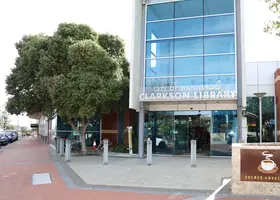
- Run local libraries.
Expenditure breakdown
These figures come from the City’s 2026/27 operational expenditure budget.
| Service | Budget |
|---|---|
Environment and sustainability | $51m |
Waste services | $40.1m |
Customer and information services | $32.5m |
Local roads, wayfinding, street lighting and drainage | $26.6m |
Community recreation and facilities | $23.4m |
Governance | $20.1m |
Planning and approval services, and public health | $13.3m |
Community development and public health | $11.2m |
Libraries, arts and culture | $8.4m |
Economic development, advocacy and tourism | $1.5m |
Numbers have been rounded.
Your rates notice
Rates notices are sent to home, land, and business owners in the City of Wanneroo in August each year.
In addition to your rates, your rates notice may include other fees and charges, such as:
Emergency Services Levy (ESL): Set by the Department of Fire and Emergency Services (DFES). We collect the levy and send the entire amount to DFES to fund emergency services for the community.
Waste service fee: Displayed separately to show the cost of waste management.
Pool fence inspection fee: If you have a pool or spa that is more than 30cm deep, Western Australian legislation requires us to inspect it at least every four years. The fee is split into four annual payments on your rates notice.
Visit the DFES website to find out more about the Emergency Services Levy.
You can find out how your rates are calculated below.
How your rates are calculated
Rates are calculated by first identifying the total revenue needed to run the City of Wanneroo.
This amount is then divided among all City ratepayers, but not everyone pays the same amount.
Your annual rates are calculated by multiplying your property’s valuation by the differential rate in the dollar, which is set by the Council. This is subject to a minimum payment, which is set each year by the City.
Your property valuation is determined by the Landgate Valuer General's Office. This is a separate organisation from the City of Wanneroo.
Landgate assigns non-rural properties (urban, residential, and commercial) a Gross Rental Value (GRV) and land used for rural purposes an Unimproved Value (UV).
GRV is the fair rental value your property might reasonably be expected to earn annually if it were rented.
When determining GRV, Landgate considers several attributes including location, age, building area and construction materials, number of bedrooms and bathrooms, and number of car shelters (garages/carports).
To find out more, visit the Landgate website.
We charge different (‘differential’) rates depending on the way the land is being used. This means we set different rates in the dollar for different categories such as ‘residential improved’, ‘residential vacant’, ‘commercial/industrial vacant’, 'commercial/industrial improved’, ‘rural and mining improved’ and ‘rural and mining vacant’. A higher rate in the dollar is applied to ‘residential vacant’ properties to promote their development, which stimulates economic growth.
Differential rates are charged under section 6.33 of the Local Government Act 1995.
We set a minimum payment because every property receives some level of benefit from works, services, and facilities provided by the City. A minimum rate ensures that everyone pays a fair share.
Section 6.35 of the Local Government Act 1995 allows a separate minimum to be applied to each rates category.
| Rate category - 2026/27 | Minimum rate | Rate in the dollar (GRV) | Rate in the dollar (UV) |
|---|---|---|---|
Residential improved | $1,105 | 6.8837 | 0.3651 |
Residential improved (strata titled caravan parks) | $161 | 6.8837 | 0.3651 |
Residential vacant | $921 | 13.7673 | 0.5526 |
Commercial and industrial improved | $1,505 | 7.8280 | 0.3246 |
Commercial and industrial vacant | $1,505 | 7.8280 | 0.3246 |
Rural and mining improved | $1,098 | - | 0.3602 |
Rural and mining vacant | $1,038 | - | 0.4714 |
Interim rates are charged when there is a change to a property during the year, such as building a new house on previously vacant land. These are adjusted rates for the remaining portion of the year and are issued throughout the year.
Frequently asked questions
Rates are calculated by multiplying a property’s Gross Rental Value (GRV) or Unimproved Value (UV) by the rate in the dollar set by Council, subject to minimum rates.
Under Landgate’s revaluation schedule, Unimproved Value (UV) properties are valued every year, while Gross Rental Value (GRV) properties are valued every three years.
Since it takes time to assess all GRV properties, there is a delay between the valuation date and when it is applied to rates. For local governments in the metropolitan area, this timeframe is 23 months.
GRV properties in the City were last valued in August 2024. Those valuations were first used for rates in the 2026/27 financial year.
UV rated properties in the City were revalued in 2025. Changes to property valuation in this category were applied in the 2025/26 financial year.
For more information about property valuations, visit the Landgate website.
GST is not payable on general rates, Waste Service charges, the Emergency Services Levy or the Pool Fence Inspection fee.
The ESL fee amount is set by the Department of Fire and Emergency Services (DFES) and funds Western Australia’s fire and emergency services. The City collects these funds on behalf of DFES through its annual Rates notice. More information is provided on the DFES website.
State Government legislation requires all private swimming pool enclosures to be inspected at least every four years. The City charges pool owners an annual fee to cover the cost of these inspections.